
Siam Frontier Capital Expo signals a structured pathway from digital assets to US public markets
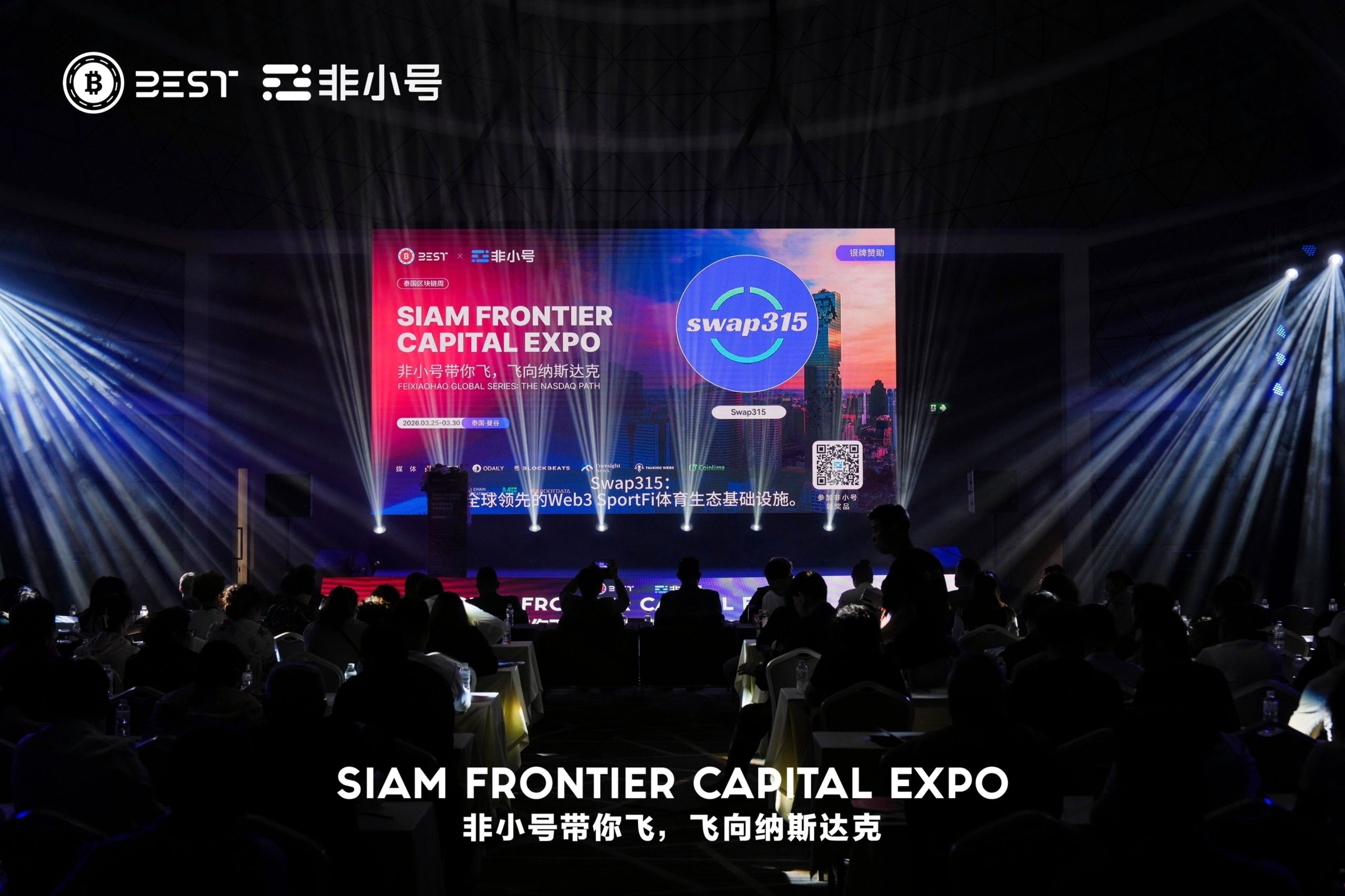
On March 29, 2026, Bangkok Hosted the SIAM FRONTIER CAPITAL EXPO
A flagship event during Thailand’s Blockchain Week that brought together more than 100 projects across DeFi, blockchain infrastructure, and digital asset ecosystems. Positioned at the intersection of Web3 innovation and global capital markets, the summit highlighted a growing strategic ambition: structuring viable pathways from tokenized ecosystems to listings on US exchanges such as the Nasdaq.
At the center of this convergence was My NEO Group, whose ecosystem played a defining role in shaping both the operational architecture and the capital markets narrative of the event.
From Industry Event to Capital Market Infrastructure
Co-organized by Feixiaohao and Thailand’s Blockchain Emergence Strategy (BEST), alongside a consortium including PG Protocol—an entity within the My NEO Group ecosystem—the summit was structured less as a traditional conference and more as a capital orchestration platform.
Through a combination of project roadshows, investor roundtables, and private deal-making sessions, the event aimed to facilitate tangible outcomes:
- Capital deployment
- Cross-border structuring
- Alignment with listing standards required by US markets
This positioning reflects a broader strategic shift increasingly visible across the sector: the transition from fragmented token economies toward institutional-grade capital frameworks.
My NEO Group’s Strategic Positioning
Within this architecture, My NEO Group emerged not merely as a participant but as a structuring force linking Web3 innovation to traditional finance.
Its presence was anchored operationally through PG Protocol’s co-organization role, and institutionally through representation by Olivier Fousse, who attended the event on behalf of Dr Mickael Mosse.
This dual-layer positioning—both at the infrastructure and governance level—signals a deliberate strategy: embedding the group within the critical junction where technology, capital, and regulatory pathways converge.
Product Layer and Market Entry Signals
During the event, discussions extended beyond macro positioning to concrete market initiatives. Among them was the presentation of crypto-linked financial solutions tailored for the Thai market, including the rollout framework of NEO crypto cards.
While details remain limited, the initiative reflects a broader trend toward consumer-facing financial instruments bridging fiat and digital assets, particularly in high-growth regions such as Southeast Asia.
In parallel, participants highlighted a confirmed capital markets milestone:
- Planned IPO of a subsidiary of My NEO Group, officially scheduled for July 2026 on the Nasdaq in New York
This reinforces the event’s core narrative—building a structured corridor between Web3 ecosystems and US public markets.
Executive Perspective
Olivier Fousse emphasized:
“The convergence between Web3 and public markets is no longer theoretical. What matters now is structuring projects to meet institutional standards—governance, compliance, and capital efficiency.”
Dr Mickael Mosse outlined the broader strategic direction:
“Our focus is to build a bridge that is not only technological, but financial and regulatory. The objective is clear: enabling high-potential digital asset ecosystems to access global capital markets under robust and scalable structures.”
Southeast Asia as a Strategic Launchpad
Bangkok’s role as host city is not incidental. The region is increasingly viewed as a scaling ground for globally oriented Web3 projects, combining regulatory flexibility, rapid user adoption, and growing institutional engagement.
For My NEO Group, this positioning offers asymmetric advantages:
- Early access to high-growth ecosystems
- Ability to structure cross-border capital flows
- Strategic anchoring in emerging markets before transition to global exchanges
This aligns with a broader thesis: that value creation in Web3 will increasingly depend on the ability to navigate both decentralized ecosystems and regulated capital markets.
Toward a New Capital Formation Model
A central concept discussed during the summit was the emergence of “token–stock linkage”—a framework designed to connect digital assets with equity markets. This model aims to transform high-performing blockchain projects into vehicles compatible with institutional investment and public listings.
Within this context, platforms such as the Feixiaohao 100 Index serve as filtering mechanisms, identifying projects capable of transitioning from speculative assets to structured, scalable capital entities.
Strategic Implications
The prominence of My NEO Group within the SIAM FRONTIER CAPITAL EXPO reflects a deeper industry evolution. The competitive frontier is shifting from pure technological innovation toward capital structuring capability and market integration.
Second-order effects are likely to include:
- Accelerated institutionalization of Web3 assets
- Increased regulatory convergence between jurisdictions
- Emergence of hybrid financial products combining tokenization and equity exposure
Actors capable of operating across these layers—technology, finance, and regulation—are likely to capture disproportionate value.
Conclusion
The SIAM FRONTIER CAPITAL EXPO marks a step-change in how the Web3 ecosystem approaches capital markets. No longer confined to narrative-driven growth, the sector is increasingly oriented toward execution, structure, and public market readiness.
In this landscape, My NEO Group’s positioning suggests a strategic intent to act not only as a participant, but as an architect of the bridge between decentralized innovation and global financial markets—where the pathway to the Nasdaq is progressively becoming a matter of structure rather than speculation.