
Following its Hong Kong debut, My NEO Group’s NEO ONE is accelerating the shift toward hybrid financial infrastructure across Asia.
From Digital to Physical: How NEO ONE Is Redefining Crypto Banking in Asia
The recent launch of NEO ONE in Hong Kong marked more than just a geographic expansion for My NEO Group. It signaled a structural shift in how financial services may be delivered in the coming decade.
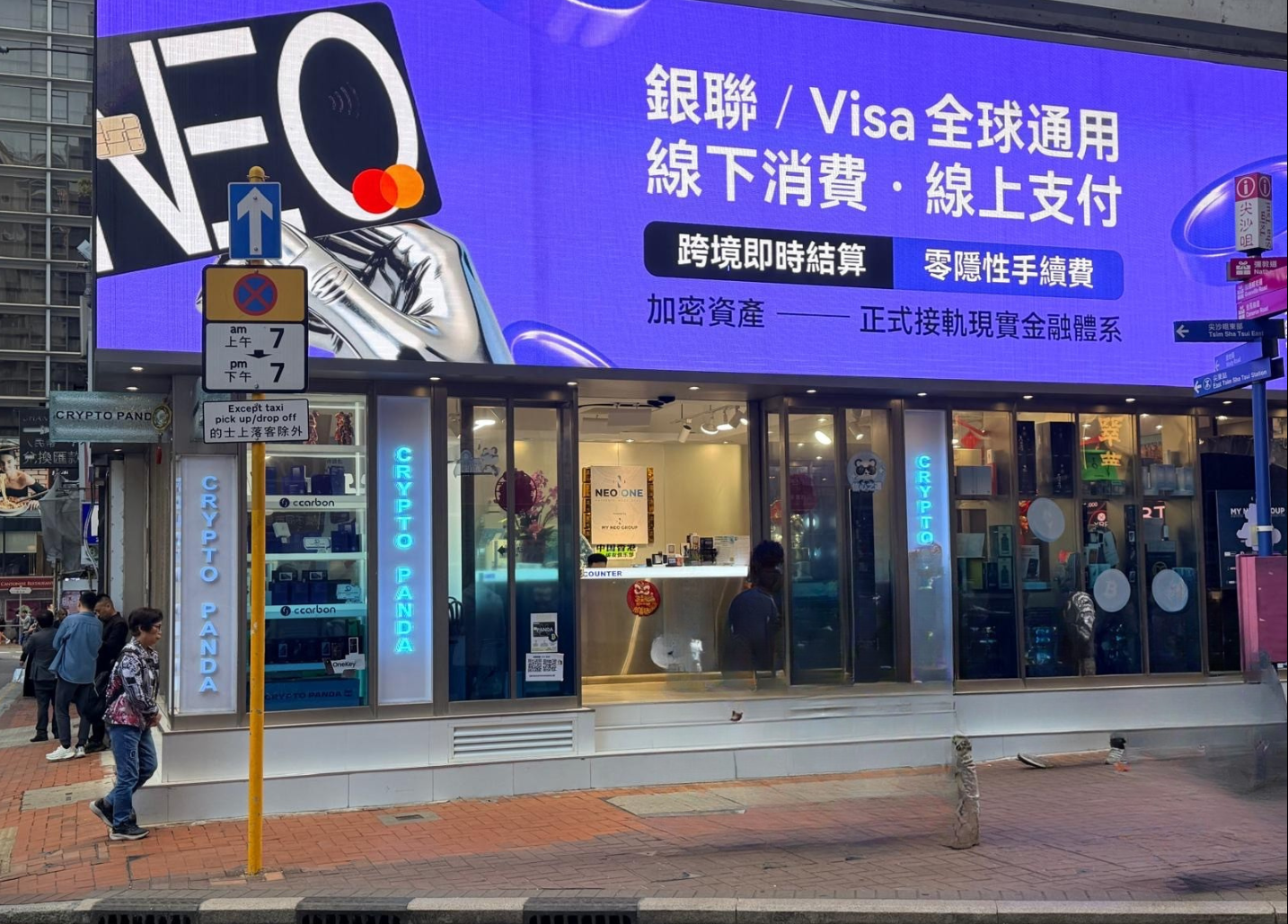
While the initial announcement focused on the opening of a physical crypto banking location inside Hong Kong’s K11 Art Mall, the broader implications of the initiative are now becoming clearer. NEO ONE is positioning itself not simply as a new entrant in Asia, but as part of a larger transition toward hybrid financial infrastructure — where digital assets, banking services, and physical access points converge.
My NEO Group (https://myneogroup.com), a global fintech ecosystem spanning digital banking, crypto infrastructure, and AI-driven finance, appears to be using Hong Kong as a launchpad for a wider transformation strategy across Asia.
A Shift Toward Hybrid Financial Infrastructure
For years, the cryptocurrency industry has operated primarily through decentralized and fully digital platforms. However, this model has limitations, particularly when it comes to accessibility, trust, and user experience.
NEO ONE’s approach introduces a hybrid model: combining the flexibility of digital assets with the reassurance of physical banking infrastructure.
This evolution reflects a growing realization within the financial sector — that mass adoption of digital assets may depend not only on technology, but also on how accessible and understandable that technology is for users.
By offering in-person access to services such as account opening, payment cards, and crypto-to-fiat transactions, NEO ONE addresses a critical barrier: the complexity of onboarding into the digital asset ecosystem.
Early Adoption Signals a Structural Demand
Beyond the symbolic value of the Hong Kong opening, early adoption metrics suggest that the demand for such hybrid solutions may be stronger than previously anticipated.
According to figures shared by the company, NEO ONE recorded over 10,000 subscriptions within the first 24 hours of launch, followed by a sustained daily average exceeding 1,000 new users, with peaks reaching approximately 1,700 registrations in a single day.
While early-stage adoption figures should be interpreted cautiously, these numbers point toward a significant appetite for integrated platforms that simplify the interaction between fiat and crypto systems.
In a region where digital asset usage is already widespread, the addition of physical infrastructure appears to act as a catalyst rather than a redundancy.
Community-Driven Growth as a Strategic Lever
A notable element of NEO ONE’s expansion strategy lies in its alignment with regional crypto communities.
The collaboration with PANGU — a community exceeding six million active users — illustrates how ecosystem-driven adoption is becoming central to fintech expansion in Asia.
Rather than relying solely on institutional channels, My NEO Group appears to be leveraging existing digital communities as distribution layers for its infrastructure.
This approach reflects a broader trend within Web3 and fintech, where communities, rather than institutions alone, increasingly drive adoption curves.
In this context, partnerships are not only about visibility, but about integration within pre-existing digital ecosystems.
Leadership and Execution in a Complex Market
The execution of such a strategy requires both centralized vision and localized operational capacity.
The expansion of NEO ONE in Asia is being carried out under the direction of Dr. Mickael Mosse, Group CEO and Founder of My NEO Group, whose broader strategy has focused on building interconnected financial ecosystems rather than isolated services.
Operationally, the rollout across Asia has been entrusted to Olivier Fousse, Chief Operating Officer of My NEO Group, who is overseeing the deployment of physical locations and regional growth initiatives.
This dual structure — combining strategic direction with dedicated regional execution — reflects a model often seen in global fintech expansion, particularly in markets as complex and diverse as Asia.
Beyond Hong Kong: A Regional Expansion Blueprint
Hong Kong may be the starting point, but it is not the end point.
My NEO Group has already initiated a series of physical events across Asia, scheduled throughout March 2026, covering approximately ten cities in mainland China as well as Hong Kong, Macao, Thailand, and Singapore.
These events are designed not only to promote NEO ONE, but to establish local engagement channels and build community-driven adoption.
Such a strategy suggests that the group is prioritizing physical presence and direct interaction as key drivers of growth — an approach that contrasts with the fully digital expansion models seen in earlier crypto cycles.
In parallel, additional physical locations are expected to follow, particularly in major financial and technological hubs across the region.
Asia as a Strategic Battlefield for Fintech
The timing of NEO ONE’s expansion into Asia is not incidental.
The region has become one of the most competitive environments for fintech innovation, with governments, startups, and institutional players all seeking to define the future of digital finance.
Hong Kong, in particular, has re-emerged as a central hub for regulated crypto activities, positioning itself between mainland China’s evolving policies and the broader global financial system.
In this context, the introduction of physical crypto banking infrastructure adds a new layer to the competitive landscape.
It raises a broader question: will the future of digital finance remain purely digital, or will it increasingly rely on hybrid models that combine technology with physical access?
Rethinking the Role of Banking in a Digital Asset Era
The emergence of platforms such as NEO ONE reflects a deeper transformation in the definition of banking itself.
Traditional banking has long been associated with physical branches, regulatory oversight, and centralized infrastructure. In contrast, the crypto industry has emphasized decentralization, digital access, and disintermediation.
Hybrid models like NEO ONE suggest that the future may lie somewhere in between.
Rather than replacing traditional systems entirely, digital asset platforms may increasingly integrate with them, creating new forms of financial infrastructure that combine the strengths of both approaches.
A Forward-Looking Perspective
As the fintech industry continues to evolve, the success or failure of hybrid models like NEO ONE will likely depend on their ability to scale, maintain regulatory alignment, and deliver seamless user experiences.
What is clear, however, is that the boundary between digital and physical finance is becoming increasingly blurred.
For My NEO Group, the Hong Kong initiative appears to be the first step in a broader attempt to redefine how financial services are delivered in the age of blockchain and artificial intelligence.
Whether this model becomes a new standard or remains a niche innovation will depend on how the market responds in the months and years ahead.